
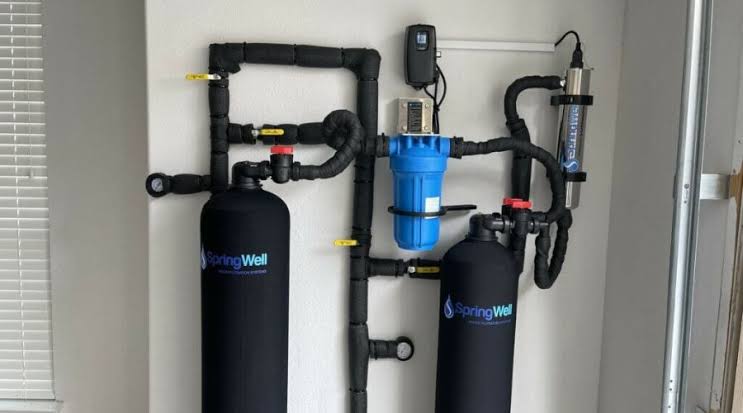
Water is involved in almost everything we do at home, yet we rarely give its quality much attention until something feels off. Maybe your morning coffee has an unfamiliar taste, your shower screen is covered in chalky deposits, or your freshly washed glasses never look quite clean. These little inconveniences can become surprisingly irritating over time.
Investing in suitable residential water filter systems can help homeowners address specific water quality issues while making everyday household routines more comfortable and convenient.
But here’s the thing: not every home needs the same treatment equipment. Water conditions vary, and what works beautifully for your neighbor might not be particularly useful for your property.
Finding the right solution begins with understanding your water and recognizing which improvements would genuinely benefit your household.
Recognizing the Signs of Common Household Water Problems
Water can collect various minerals and other substances before reaching your kitchen faucet. Its characteristics depend on the original source, treatment processes, and the condition of household plumbing.
White deposits around faucets often indicate water hardness. Reddish stains may be associated with iron, while unpleasant tastes and odors can have several different causes.
Sometimes, these issues are more noticeable in certain areas of the house than others.
Perhaps your bathroom fixtures require constant cleaning, but your drinking water tastes perfectly normal.
These differences provide useful clues, although they shouldn’t replace proper testing.
Understanding your actual water conditions makes it easier to select appropriate treatment equipment rather than spending money on products that may not solve the problem.
How Better Water Can Influence Everyday Household Comfort
One of the most appealing aspects of improved water quality is how it can positively influence familiar activities that we often take for granted.
Appropriate filtration may help reduce unwanted tastes and odors, making drinking water and certain beverages more enjoyable.
Addressing excessive hardness can also help limit future mineral deposits around bathroom fixtures and inside certain appliances.
Think about how much time you spend cleaning your kitchen and bathroom throughout the week. Even a modest reduction in stubborn mineral residue could make those responsibilities less demanding.
Better water conditions may also support more effective soap performance, particularly when hardness is reduced.
These benefits depend on the treatment equipment and incoming water characteristics, but they can add up to meaningful improvements in everyday household comfort.
Why Combining Water Softening and Filtration Sometimes Makes Sense
People frequently assume that water filters and softeners perform identical functions. Actually, they address different concerns.
A well-designed approach to water softening and filtration for homes combines appropriate treatment technologies according to measured water conditions and household requirements.
Conventional water softeners reduce hardness minerals through ion exchange. This process helps limit future scale formation and improves the performance of soaps and detergents.
Sediment filters, meanwhile, capture suspended particles such as sand and rust.
Activated carbon filtration can reduce certain unpleasant tastes, odors, and contaminants, while reverse osmosis can address various dissolved substances in drinking water.
Some households benefit from combining these technologies. Others might only need a single treatment stage.
The objective isn’t to install as much equipment as possible. It’s to find a practical arrangement that addresses genuine water quality concerns.
Choosing Between Centralized and Dedicated Filtration Systems
Before purchasing treatment equipment, consider where water quality problems affect you most.
If you’re mainly concerned about drinking water taste, a dedicated under-sink filter could be a practical and economical option.
However, when concerns involve several bathrooms, laundry facilities, and other household fixtures, centralized treatment may make more sense.
Whole-home filtration treats incoming water near the main supply connection before it reaches connected fixtures.
This approach may be particularly useful when sediment or other targeted substances affect multiple areas of the property.
Consider available installation space, household water demand, incoming pressure, and maintenance accessibility.
There’s little point in purchasing an elaborate system if a simpler solution can deliver the results you’re looking for.
Protecting Appliances and Reducing Household Maintenance
Water quality can influence more than the appearance of your kitchen sink.
Hardness minerals may accumulate inside kettles, dishwashers, water heaters, and other water-using appliances. Over time, these deposits may interfere with equipment performance and increase maintenance requirements.
Appropriate softening can help reduce future mineral accumulation, although existing deposits may still require separate cleaning or servicing.
Sediment filtration can also help prevent certain suspended particles from entering sensitive plumbing components.
These benefits are particularly valuable when considered over several years rather than just a few weeks.
Taking a preventive approach to water-related maintenance can be easier than repeatedly dealing with the same frustrating problems.
Understanding the Long-Term Responsibilities of Water Treatment
Filtration equipment isn’t something you install and forget about indefinitely.
Sediment cartridges gradually collect debris, activated carbon filters eventually lose treatment capacity, and conventional softeners require periodic salt replenishment.
Before purchasing equipment, ask about maintenance intervals, replacement component availability, and anticipated operating expenses.
Choose a system that remains practical to maintain alongside your other household responsibilities.
Periodic water testing is also worthwhile, particularly for properties relying on private wells or equipment designed to reduce potentially harmful contaminants.
Remember that ordinary filtration and softening don’t necessarily make unsafe water suitable for drinking.
Consistent maintenance and appropriate testing help ensure that your equipment continues performing as intended.
Making a Thoughtful Investment in Your Home’s Water Supply
Improving household water doesn’t need to be complicated or unnecessarily expensive.
Start with reliable testing, identify the problems that matter most, and choose treatment equipment with verified performance suited to your property.
The best home improvements often work quietly in the background, making familiar activities a little easier and more enjoyable.
Whether it’s preparing your morning coffee, washing clothes, or keeping bathroom fixtures clean, thoughtfully selected water treatment can bring lasting practical value to everyday life.