In today’s fast-paced digital landscape, video content has become an indispensable tool for businesses aiming to capture audience attention, drive engagement, and boost conversions. From social media campaigns to product demonstrations and internal training materials, the demand for high-quality videos continues to surge. However, traditional video production methods often involve significant time, cost, and resources, creating bottlenecks for companies seeking to maintain a consistent content output. This is where AI video generators for business emerge as a transformative solution, enabling organizations to scale video creation rapidly while maintaining professional standards.
The Rising Imperative for Video in Modern Business Strategies
Businesses across industries recognize that video outperforms static content in virtually every metric. It conveys complex messages more effectively, fosters emotional connections, and improves retention rates among viewers. Marketing teams rely on videos for advertisements, explainer series, and customer testimonials, while sales departments use them to personalize pitches and nurture leads. Human resources professionals incorporate video for onboarding and compliance training, and executive leadership employs it for thought leadership and corporate communications.
Yet, the challenge lies in production volume. A single professionally produced video can require weeks of planning, scripting, filming, and editing, often involving specialized talent and equipment. For enterprises needing dozens or hundreds of videos monthly—tailored for different platforms, audiences, or languages—this traditional approach becomes unsustainable. AI-powered tools address this gap by automating key aspects of the process, allowing teams to generate polished videos in hours rather than weeks.
Core Capabilities of Advanced AI Video Generators
Modern AI video generators leverage sophisticated algorithms, including natural language processing, computer vision, and generative models, to streamline creation workflows. These platforms typically offer a suite of features designed specifically for business applications.
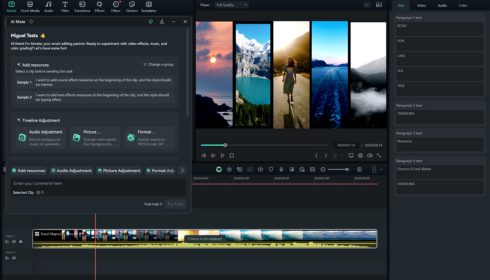
Users begin by inputting text-based prompts, such as a script, blog post, or product description. The AI then synthesizes this content into a complete video, selecting appropriate visuals from vast stock libraries or generating custom imagery. Voiceover synthesis provides realistic narration in multiple accents and languages, eliminating the need for voice actors. Animation tools create dynamic motion graphics, transitions, and effects, while avatar presenters—lifelike digital humans—deliver messages with natural gestures and expressions.
Advanced systems also support customization at scale. Businesses can upload brand assets, including logos, color palettes, fonts, and preferred voice profiles, ensuring every output aligns with corporate identity guidelines. Integration with existing content management systems further enhances efficiency, allowing seamless export to various platforms.
Accelerating Production Without Sacrificing Quality
One of the most compelling advantages of AI video generation is its ability to dramatically reduce turnaround times. What once took a production team days or weeks can now be accomplished in minutes. This speed enables rapid iteration: marketing professionals can test multiple versions of an advertisement, analyze performance data, and refine messaging almost in real time.
Quality remains a priority in leading solutions. State-of-the-art models produce high-resolution outputs suitable for professional use, with coherent storytelling and visually appealing compositions. Human oversight integrates smoothly—users review and edit generated drafts, making adjustments to pacing, emphasis, or specific elements before finalization. This hybrid approach combines AI efficiency with human creativity, resulting in outputs that feel authentic rather than automated.
For enterprises operating globally, multilingual capabilities prove invaluable. A single source script can generate localized versions in numerous languages, complete with culturally appropriate visuals and idiomatic voiceovers. This functionality supports international expansion efforts without the proportional increase in production costs typically associated with translation and adaptation.
Cost Efficiency and Resource Optimization
Implementing AI video generation delivers substantial financial benefits. Traditional production often involves recurring expenses for crew, studio space, equipment rentals, and post-production services. In contrast, subscription-based AI platforms operate on predictable pricing models, typically charging per minute of generated video or offering unlimited plans for high-volume users.
These tools also democratize video creation within organizations. Team members without specialized skills in filmmaking or editing can produce professional-grade content using intuitive interfaces. This shift reduces dependency on external agencies or dedicated media departments, freeing budgets for other strategic initiatives. Over time, the return on investment becomes evident through increased content velocity and improved marketing performance metrics.
Real-World Applications Across Business Functions
Marketing departments frequently lead adoption, using AI to create personalized video emails, social media reels, and landing page enhancements that drive higher conversion rates. E-commerce businesses generate product showcase videos en masse, highlighting features and benefits to influence purchasing decisions.
Customer support teams develop tutorial libraries and FAQ responses in video format, improving user satisfaction and reducing ticket volumes. Sales organizations craft tailored prospecting videos that incorporate recipient-specific details, fostering stronger relationships and shortening sales cycles.
Internal communications benefit equally. Leadership messages, policy updates, and training modules reach employees more effectively through engaging video formats. In regulated industries, consistent messaging ensures compliance while maintaining clarity.
Overcoming Implementation Challenges
While the advantages are clear, successful deployment requires thoughtful planning. Organizations must establish governance frameworks to maintain brand consistency and message accuracy. Training programs help teams maximize platform capabilities and integrate AI outputs into broader content strategies.
Data privacy and security considerations are paramount, particularly when handling sensitive corporate information. Reputable providers offer enterprise-grade protections, including encrypted processing and compliance with relevant standards.
Starting with pilot projects allows businesses to refine workflows and demonstrate value before full-scale rollout. Collaboration between creative, technical, and legal stakeholders ensures alignment with organizational objectives.
Strategic Integration for Long-Term Advantage
Forward-thinking companies treat AI video generation as a core component of their digital infrastructure rather than a standalone tool. Integration with analytics platforms provides insights into video performance, informing future content decisions. Automation workflows trigger video creation based on specific events, such as new product launches or customer milestones.
As technology continues to advance, these systems will incorporate even more sophisticated features, including real-time personalization and immersive formats. Businesses that establish proficiency now position themselves to capitalize on these developments.
Building Competitive Edge Through Video Velocity
The ability to produce high-quality video content at scale represents a significant competitive differentiator in an attention-scarce environment. Organizations leveraging AI video generators can maintain more frequent, relevant communications with customers, employees, and stakeholders. This agility translates into stronger brand presence, deeper audience relationships, and measurable business growth.
By embracing these tools strategically, companies transform video from a resource-intensive obligation into a scalable asset that drives innovation and performance across all functions. The future of business communication is undeniably visual, and AI provides the means to lead rather than follow in this evolution.