The bedroom is often the most overlooked room in the house. We focus on kitchens for entertaining, living rooms for lounging, bathrooms for function—but the bedroom? That space where we begin and end every day? It somehow falls to the bottom of the design list. And yet, it’s arguably the most personal, the most sacred corner of the home.
Creating a space that truly feels like you—calming, intentional, and livable—doesn’t require a design degree or a celebrity budget. It starts with paying attention to what makes you feel rested, happy, and grounded. It’s not about replicating some perfectly staged photo. It’s about designing a space that actually works for the way you live (and sleep).
Let’s Start With the Essentials: What Does the Room Need?
Before you even think about color schemes or wallpaper, take a good, honest look at what your bedroom has been doing well—and what it hasn’t. Are you tripping over clutter each morning? Is the lighting too harsh at night? Are you using your dresser top as a dumping ground for things you don’t know where else to put?
This isn’t about judgment—it’s about opportunity. It’s the perfect starting point for choosing bedroom furnishings that don’t just “look nice,” but serve a purpose. Think of furniture as your support system: a solid bed frame that doesn’t squeak when you roll over, nightstands that hold more than just a lamp, and a chair you actually use instead of piling laundry on.
Pick pieces that make your life smoother—not ones that make you feel like you’re living in a furniture catalog.
The Art of the Retreat: Creating a True Escape
Everyone deserves a room that feels like a breath of fresh air. But peace doesn’t always come from minimalism. For some, calm lives in crisp white linens and sheer curtains. For others, it’s deep hues, heavy textures, and low lighting that wraps around them like a hug.
Whichever direction speaks to you, the goal of restful environment design is to support the rhythms of rest, not disrupt them. It means investing in layers: layered lighting (think overhead + task + soft accent), layered bedding, and maybe even layered sound if white noise or calming playlists are your thing.
It’s also about what stays out of the bedroom. That means boundaries around clutter, devices, and yes, even that pile of unfolded laundry that’s become a permanent roommate. It’s okay to have a little mess—it’s human—but making intentional choices helps the room stay aligned with its real job: rest.
Elevating the Everyday: What Makes a Bedroom “Master” Material?
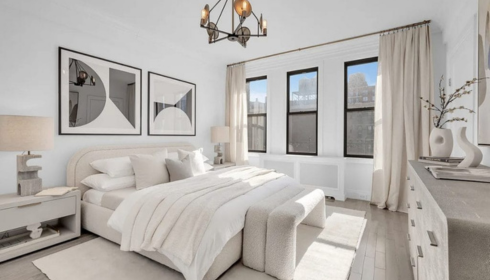
Designing a master bedroom isn’t just about size. It’s about flow. About how the room supports your habits, routines, and sense of calm. The best master bedroom styling makes the space feel considered, grown-up, and deeply personal—not because it’s fancy, but because it fits.
Maybe that looks like a pair of statement lamps that turn down low at night. Or a long bench at the foot of the bed for setting down bags, books, or an outfit for tomorrow. Maybe it’s matching nightstands—or maybe it’s not, because one of you reads and the other just needs space for a phone charger and a glass of water.
It’s these small, thoughtful touches that make a room feel whole. That tell your brain, “this is where I recharge.”
Making Room for Ritual
We all have habits—whether we realize it or not. Some people start their mornings journaling by the window. Others love the quiet cup of tea before bed. Some sneak in yoga stretches or ten minutes of scrolling before sleep.
Whatever your ritual, your bedroom should support it.
That could mean a small reading corner with soft light and a side table for books. It could be as simple as a tray on your dresser that holds your watch, your lip balm, and your wedding ring. Or a diffuser that clicks on at 9 p.m. like clockwork.
When you design with your daily rituals in mind, you’re not just making things easier—you’re making them sacred. And that has a way of turning the ordinary into something a little more beautiful.
The Beauty of Imperfection
Here’s something no one tells you when you start designing a bedroom: it doesn’t have to be “done.” Not all at once, and maybe not ever. A home evolves, and so do your needs. You’ll swap out lamps, shift the bed, donate that rug that never laid flat.
That’s not failure. That’s living.
The trick is to keep paying attention. When something stops working—too much light, not enough storage, an awkward traffic flow—it’s a signal. And you don’t need to wait for a full makeover to respond. A small shift in layout or a new storage bin can be just as powerful as a full renovation.
Final Thoughts: Your Bedroom, Your Way
At the end of the day, your bedroom isn’t a showroom. It’s your sanctuary. Your soft landing. It doesn’t have to be trendy or perfect or worthy of social media. It just has to feel like you.